Cash Book Template
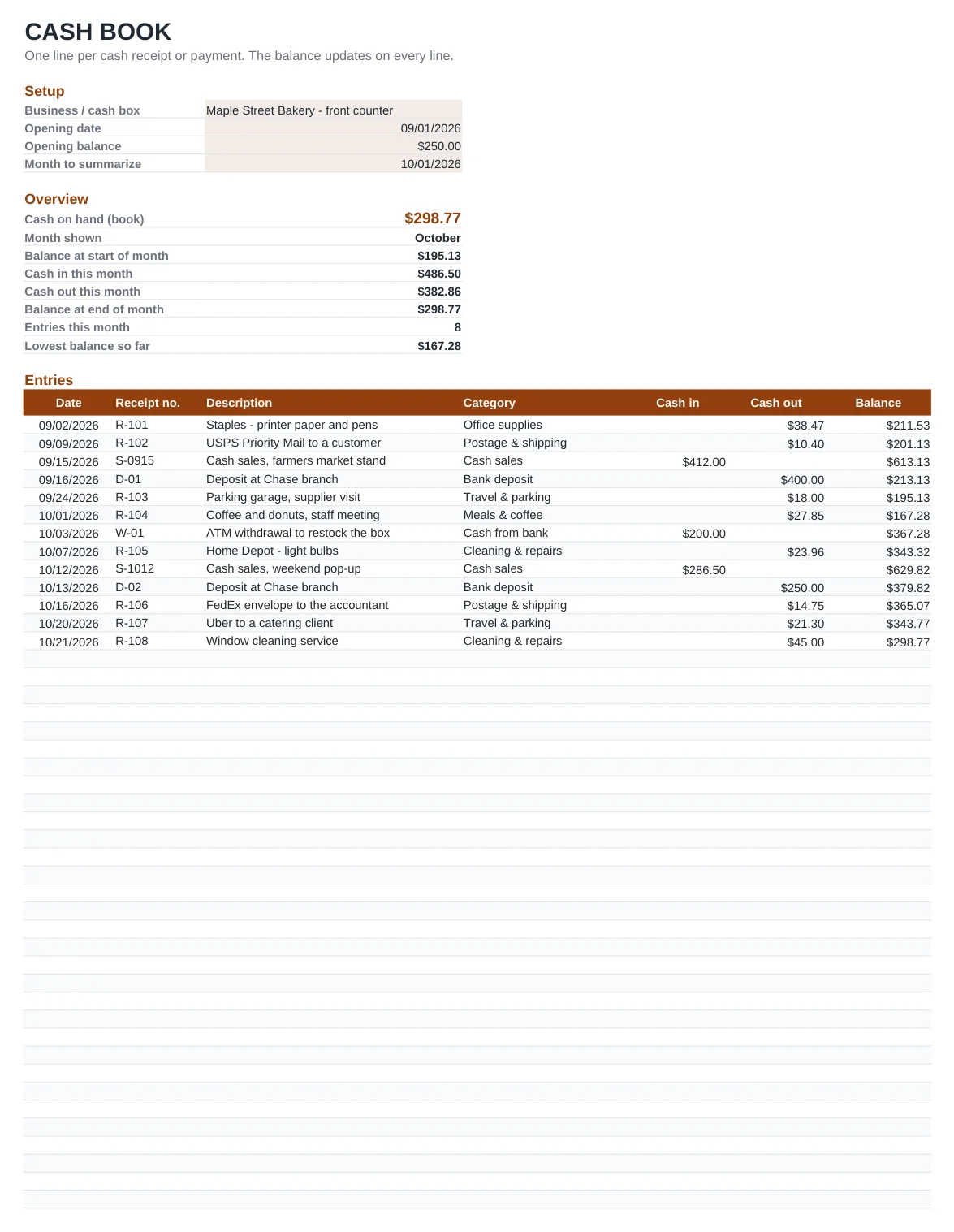
Keep track of the cash box or the register drawer the way a bookkeeper would. Enter your opening balance once, then add a line for every receipt and every payment: date, receipt number, what it was for and a category from the drop-down. The balance column carries forward on every line, so you always know how much should be in the box.
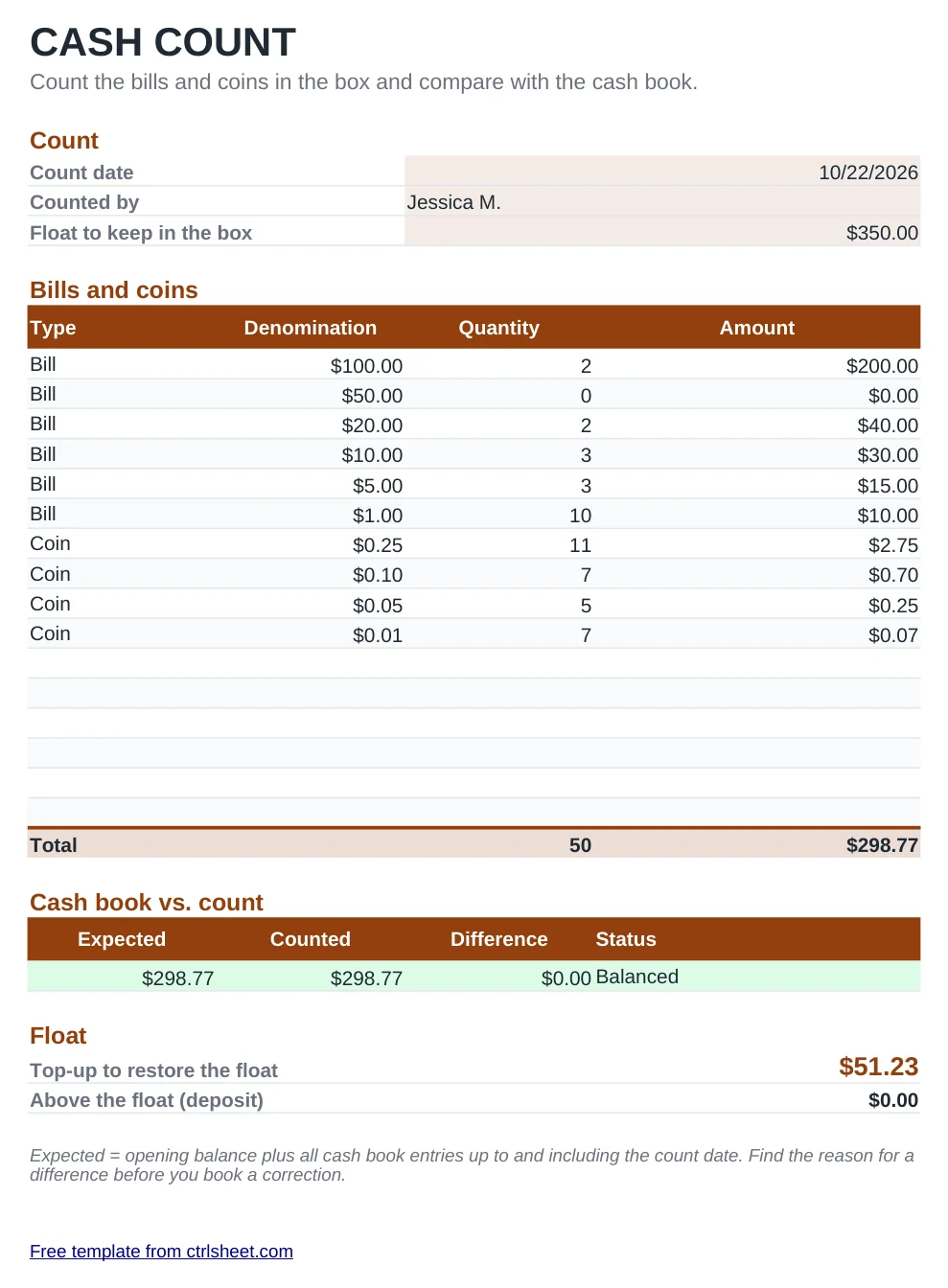
When it is time to close out, open the Cash count sheet, type how many of each bill and coin you have, from $100 bills down to pennies, and the sheet compares the count with the book. A green Balanced or a red Cash short tells you at once whether something is missing, and the float section shows how much to replenish.
What's included
- Running balance on every line, starting from your opening balance
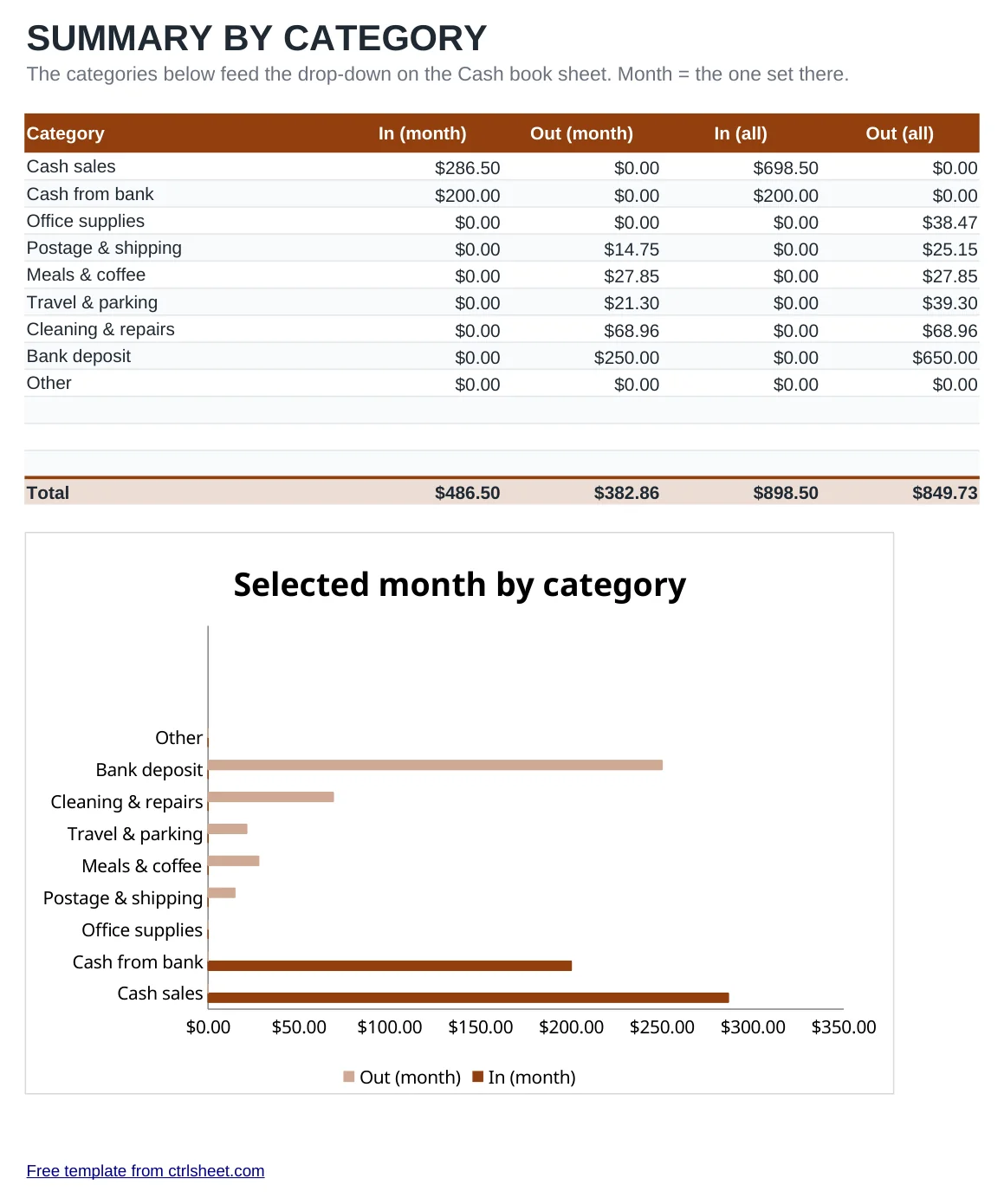
- Category drop-down plus a summary per category for the selected month and for all entries
- Month overview: opening and closing balance, cash in, cash out and number of entries
- Cash count sheet with US bills and coins, expected vs. counted and the difference highlighted
- Float check that shows the top-up needed or the surplus to deposit at the bank
- Works in Excel, Google Sheets and LibreOffice, prints on Letter paper
How to use it
- Clear the sample entries and enter your business name, opening date and opening balance.
- Rename the categories on the Categories sheet so they match how you spend and receive cash.
- Add one line per transaction with the receipt number, and put the paper receipt in a numbered envelope.
- Pick a month in the Setup block to see that month's totals and category summary.
- At the end of the day or week, count the box on the Cash count sheet and investigate any difference.
Running a petty cash box without surprises
Use an imprest float: decide on a fixed amount, say $300, and when it runs low, replenish exactly what was spent. The receipts plus the cash left should always add up to the float, which makes a missing receipt easy to spot.
Give the box one custodian. When two or three people can take cash out, nobody can explain a shortage. Ask for a receipt or a signed slip for every payout, even a $5 parking fee.
Deposit cash sales promptly instead of letting them pile up in the drawer, and record the deposit as Cash out with the bank deposit slip number. Your accountant will match those lines against the bank statement.
Frequently asked questions
What is the difference between a cash book and a check register?
A check register follows a bank account. This cash book follows physical cash: a petty cash box, a register drawer or the money you collect at a market stand.
How is the expected amount on the Cash count sheet calculated?
It takes the opening balance and adds every cash in and subtracts every cash out dated on or before the count date. Leave the count date empty to compare against all entries.
Can the balance go negative?
It should not, because you cannot spend cash you do not have. If a balance turns red, an entry is missing or a date is wrong. The Lowest balance figure in the overview helps you catch it.
How many entries does it hold?
150 lines. For a busy register, save one copy per month or insert rows inside the table; the totals and the drop-down extend automatically.
Question or problem with this template? Contact us