Petty Cash Book
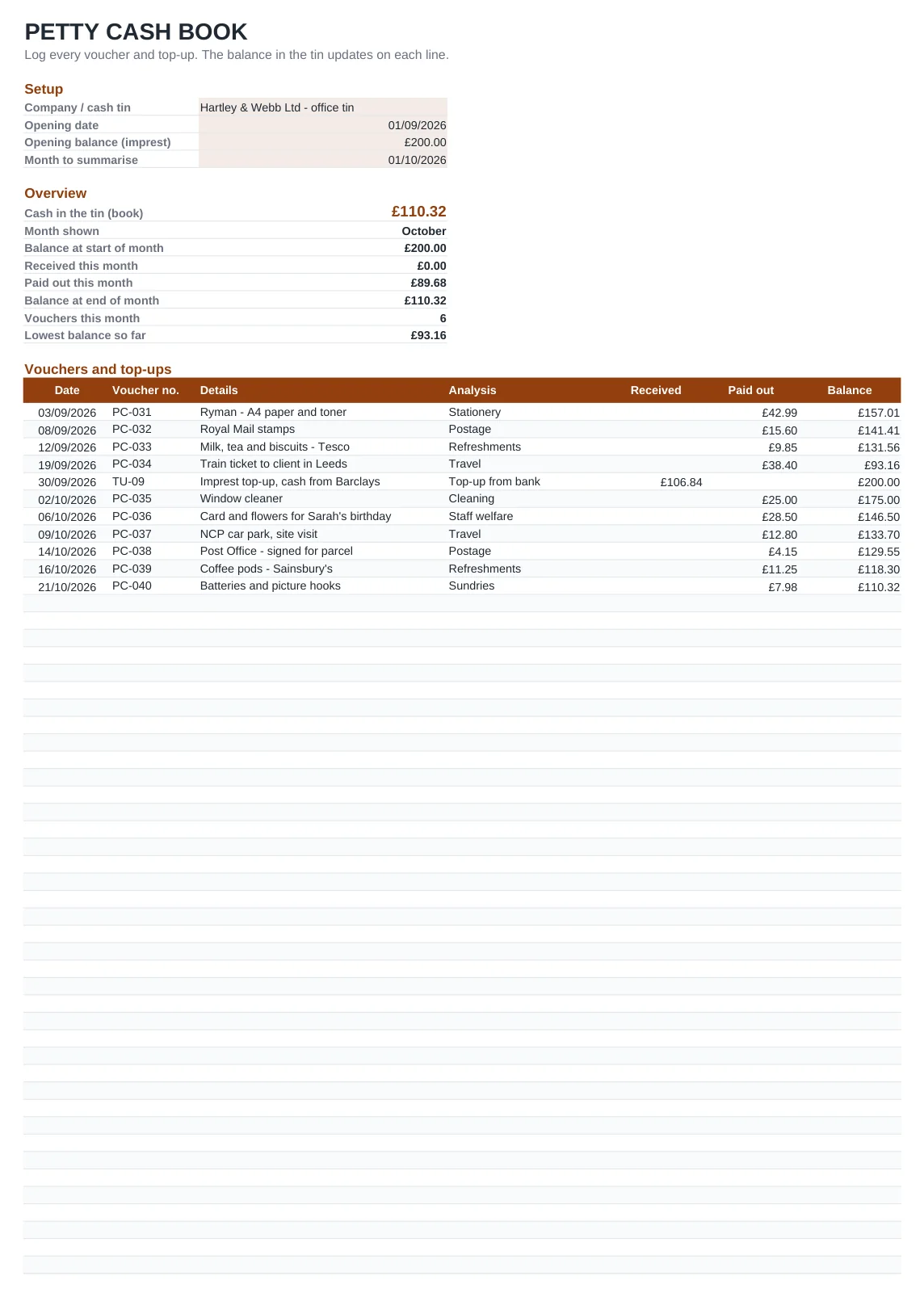
A petty cash book for the office tin, run on the imprest system most UK businesses use. Set the agreed float, then record every voucher with its number, details, analysis category and amount paid out, and every top-up from the bank as money received. The balance column keeps a running total, so the book always says how much ought to be in the tin.
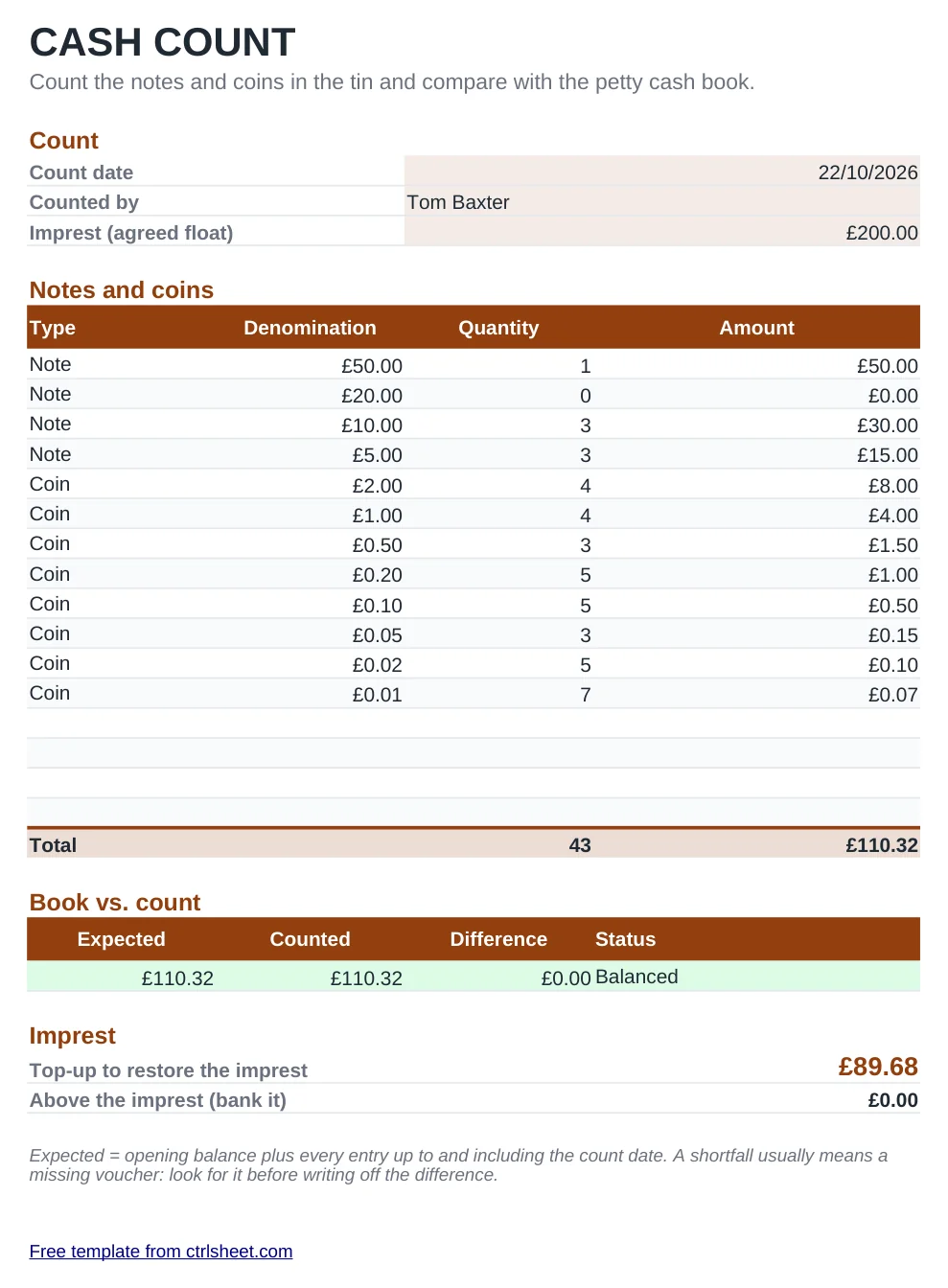
The Cash count sheet lists sterling notes and coins from £50 to 1p. Type the quantities and it adds them up, sets the total against the book and flags any shortfall in red. It also works out the top-up needed to bring the tin back to the imprest, which is the figure you draw from the bank.
What's included
- Imprest-style petty cash book with voucher numbers, details and a running balance
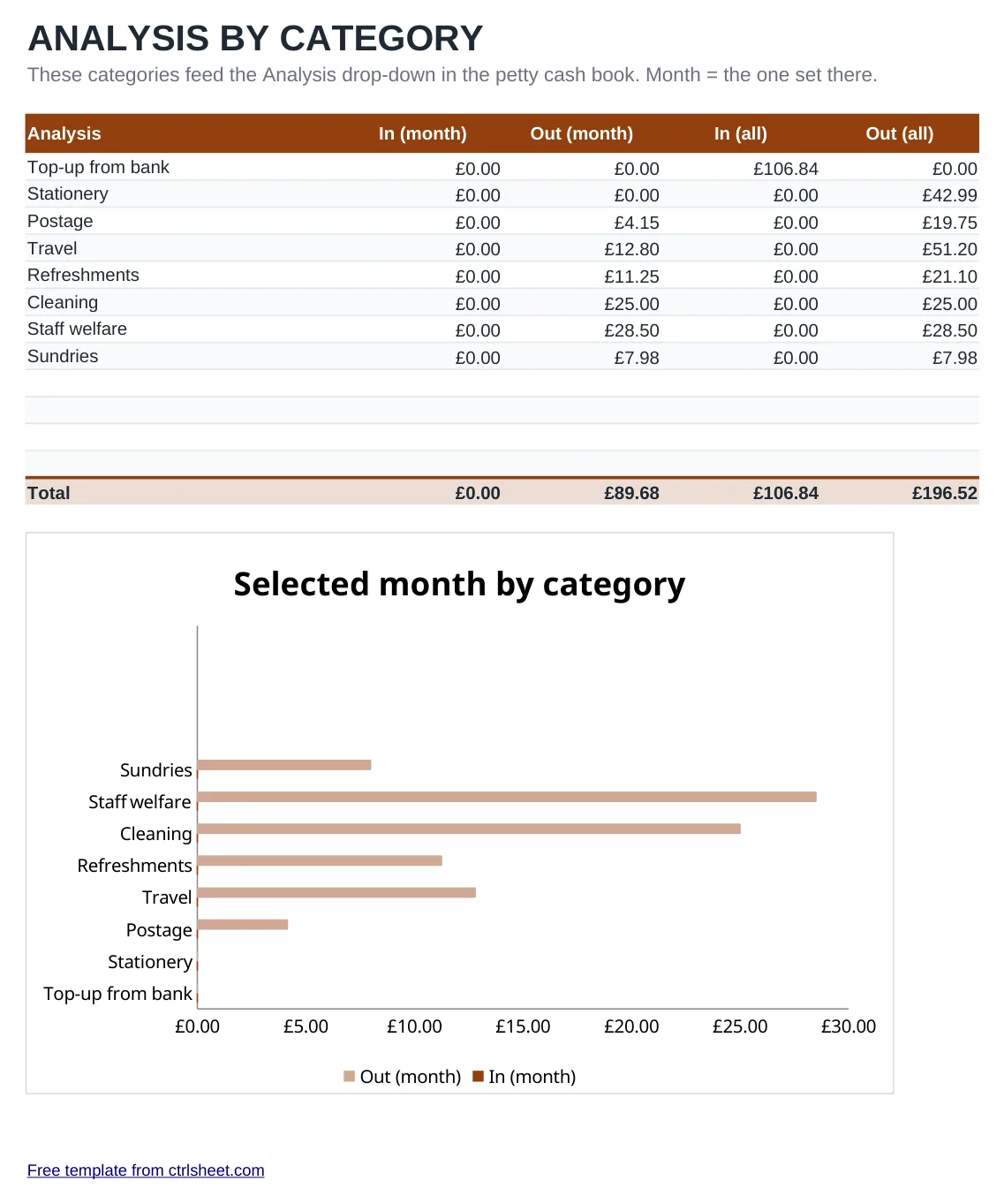
- Analysis drop-down plus a category summary for the month and for all vouchers
- Monthly overview: opening and closing balance, received, paid out and number of vouchers
- Cash count with sterling notes and coins, expected vs. counted, difference flagged in red
- Top-up figure to restore the imprest, ready for your next bank withdrawal
- Works in Excel, Google Sheets and LibreOffice, prints on A4
How to use it
- Delete the sample vouchers and enter the company name, opening date and the imprest amount as the opening balance.
- Adjust the analysis categories on the Categories sheet to match your nominal ledger codes if you like.
- Number each petty cash voucher and log it the same day, attaching the till receipt to the voucher.
- Count the tin on the Cash count sheet at month end or before every top-up.
- Draw the top-up amount from the bank and record it as Received with the date you put it in the tin.
Keeping the petty cash tin in order
Under the imprest system the vouchers plus the cash in the tin always equal the float. If they do not, a voucher is missing, an amount was written down wrongly or cash went out without a slip. Count before each top-up and the gap is never more than a few weeks old.
If you are VAT registered, keep the original receipts, not just the voucher. A till receipt showing the supplier's VAT number is what lets you reclaim the VAT on stationery, cleaning supplies or small repairs.
Keep the tin locked, give one person the key and have someone else sign off the monthly count. It takes five minutes and protects the person holding the cash as much as the business.
Frequently asked questions
What is an imprest system?
You fix the float, for example £200, and top it up by exactly the amount spent since the last top-up. The total of vouchers and cash on hand always comes back to the same figure.
How do I record a top-up from the bank?
Add a line with the category Top-up from bank and the amount in the Received column. The running balance rises back towards the imprest.
What does the Short status on the cash count mean?
There is less cash in the tin than the book says. Check for an unrecorded voucher or a typing error before you post the difference as a write-off.
Can I use it for VAT?
It records gross amounts paid out. For a VAT return, take the VAT from the original receipts or add a VAT column next to Paid out.
Question or problem with this template? Contact us